Here are a few simple evaluation techniques €“ many more are available. The key is to use a method(s) that you are comfortable with and avoid making evaluations complex.
Some problems in themselves may be complex and require more elaborate methods to be employed, but the following techniques can be used for most day-to-day problems in a pharmacy.
This approach focuses on the financial aspect of each option. What are the costs (direct and indirect) and the financial benefits of each option?
This method can be used in conjunction with other evaluation methods to make quick decisions within a practice. For example, do we invest in a dispensing robot?
SWOT analysis can be used to identify the strengths and weaknesses of alternative options and the opportunities and threats that arise from those options. It is a useful tool when involving other members of staff and, when used in combination with other tools, can greatly enhance decision making.
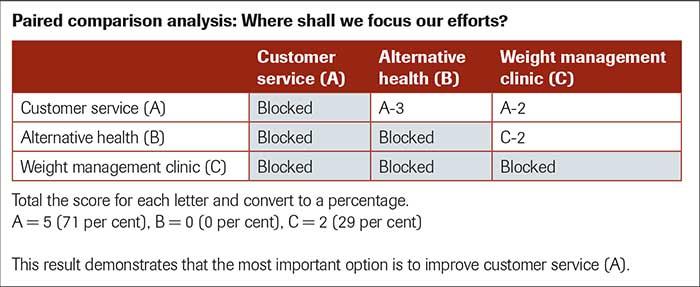
Paired comparison analysis helps you work out the importance of a number of available options relative to each other. This makes it easy to select the solution that will give you the greatest advantage.
In the example below, a community pharmacy has identified a 15 per cent fall in sales year on year. They want to explore different ways in which to increase turnover. They have limited resources, but can choose to improve customer service, expand the alternative health section or develop a weight management clinic.