


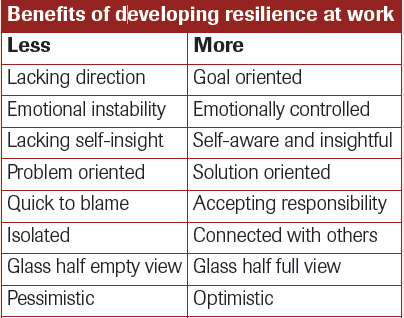
Even if you're not a naturally resilient person, you can improve and work to develop a resilient mindset and attitude. To do so, try to incorporate as many of the following into your daily life:
This short quiz will take you a few minutes to complete and will show you where you are doing well and where you might need to improve.
Rate yourself from 1 to 5 (1 = very little, 5 = frequently or strong)
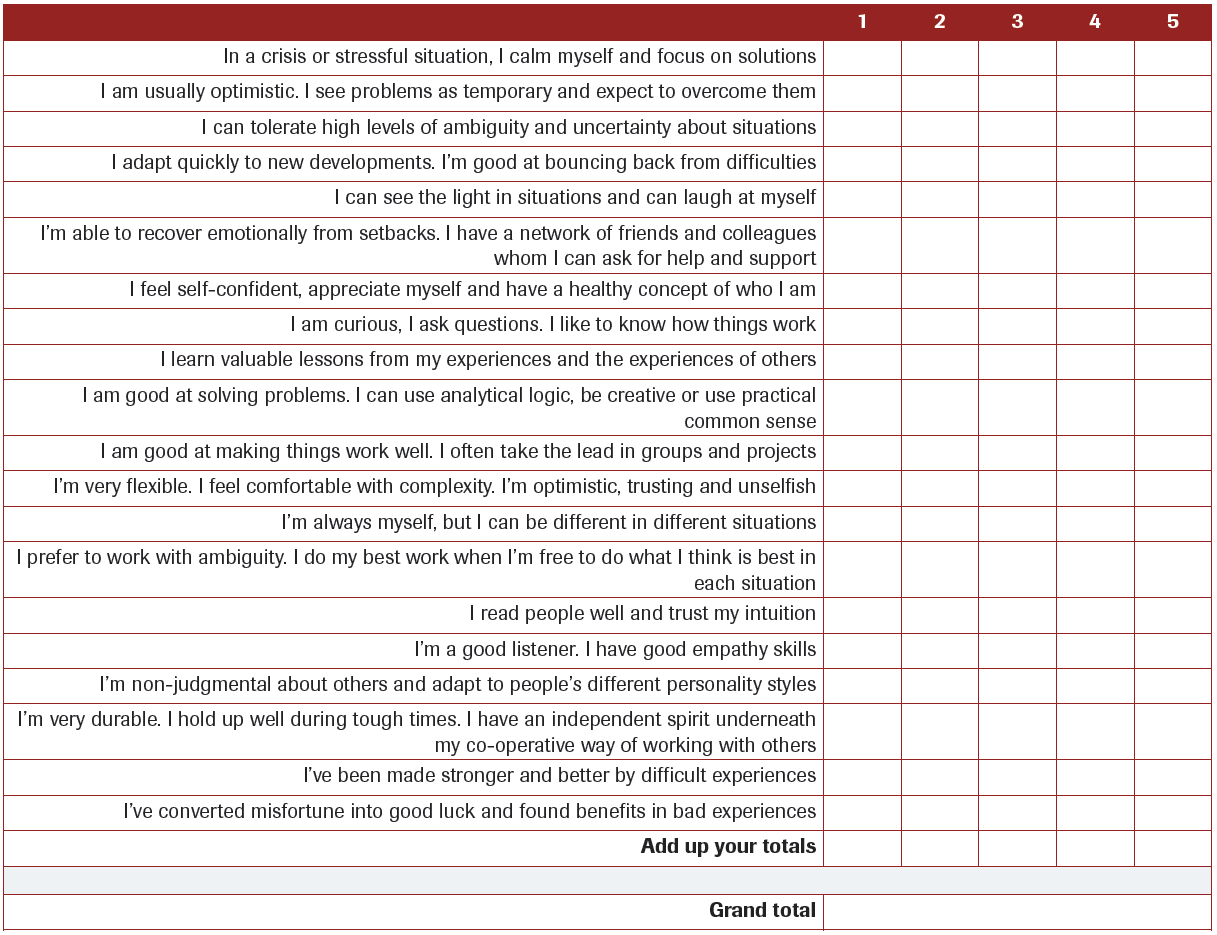
Over 85: You demonstrate high levels of resilience
65-85: You show the ability to be resilient in most situations
50-65: You can cope in some situations
40-50: You really struggle to be resilient
Under 40: You really need to work on developing resilience
At some point in our lives, we all face setbacks and things that come along and blindside us. Some of these challenges may be relatively minor, while others can have a major impact.
In this module, we have highlighted that resilient people are able to use their skills and strengths to cope and recover, whereas that lacking resilience can become overwhelmed by these experiences and simply fall apart. They may find themselves dwelling on problems and using unhealthy coping mechanisms.
By working on the simple tips here and through a fuller review of the suggested further reading, you will find your personal resilience capacity increasing. This will not happen overnight, but it is something that you can work on and develop. In this fast-paced world, few would argue that this is an essential skill for both our professional and personal lives.
1. McGee, P. 2015. S.U.M.O (Shut Up, Move On), the straight-talking guide to succeeding in life. Chichester: John Wiley and Sons
2. Crutchley, L. 2015. How to be happy (or at least less sad). London: Ebury Publishing
3. Webb, L. 2012. How to be happy, simple ways to build your confidence and resilience to become a happier, healthier you. Chichester: Capstone Publishing
Resiliency Quiz took from resilicencyquiz.com (Practical Psychology Press) and based on The Resiliency Advantage by Al Siebert (Berrett-Koehler)
The next step is to put these ideas into action. Finish by recording your learning outcomes.