

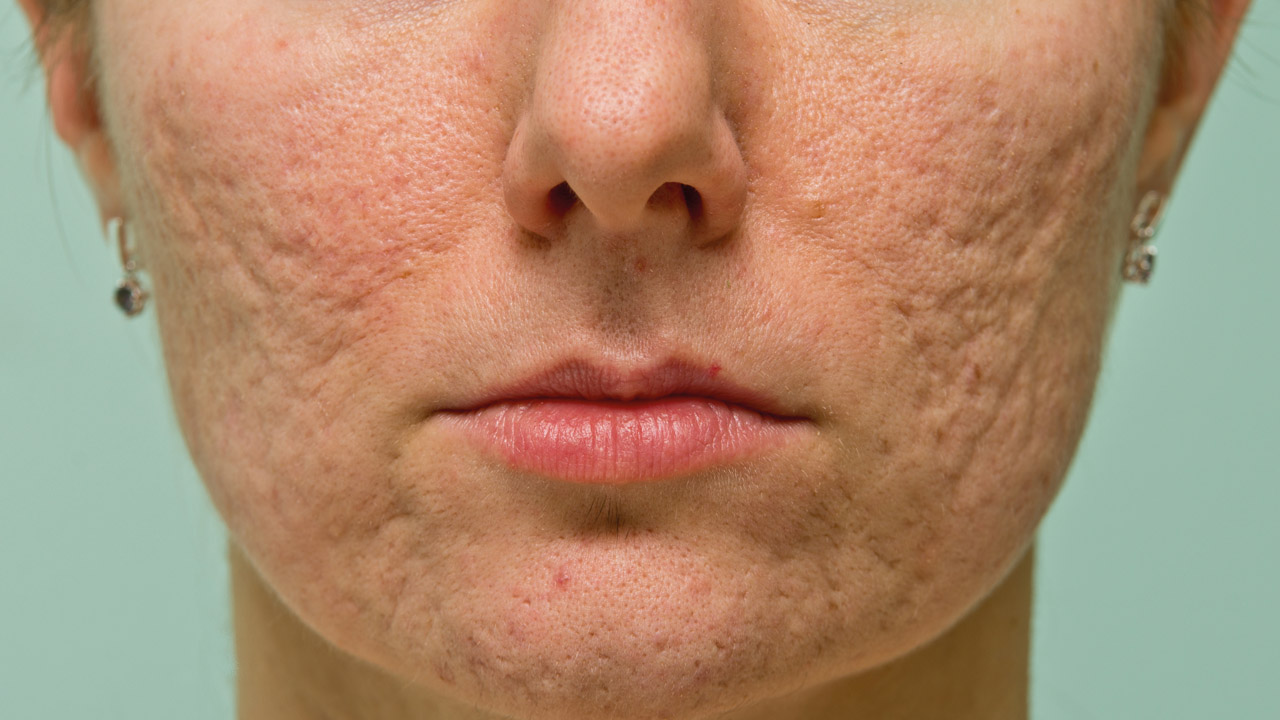
Scarring affects over 20 million people in the UK and while nearly half of people are aware of emotional problems relating to scarring, less than a quarter know about the physical impact that it can have, according to research from The Scar Free Foundation.
Most scars fade over time, but they don’t always completely disappear, and some may become raised and/or have a different texture to the surrounding skin. Severe scarring can cause pain, itching and a loss of movement – it can even affect people’s ability to breathe and cause emotional challenges, according to Leanne Skuse, head of skin camouflage at the Changing Faces charity.
“Acquiring a visible difference, such as scarring, not only has a physical impact on a person, but can have an emotional one too,” she says. “Loss of identity is something that a lot of our community speak about. Who they see in the mirror no longer matches the mental image they have of themselves, and this can be challenging to cope with.”
Layer up
The skin is the body’s largest organ and, despite being just a few millimetres thick, makes up around one-seventh of a person’s body weight. Its main function is to prevent water loss and protect the inside of the body from the outside environment, including bacteria, viruses, parasites, heat and the sun’s UV rays. It also has other essential roles, such as controlling the internal body temperature and helping people to sense the world around them. An average square inch of skin contains 650 sweat glands, 20 blood vessels and more than 1,000 nerve endings.
Skin has three layers:
- The epidermis is the waterproof outer layer that gives skin its colour. It’s constantly getting rid of old, dead cells and making new ones, which means the epidermis can repair itself when it gets damaged – this process can lead to scar formation
- The dermis is a layer of tissue beneath the epidermis. It gives skin its strength and elasticity and protects the body from physical stress. It also makes sweat and oil, and contains blood vessels, hair follicles and nerve endings that detect heat, pressure and pain
- The hypodermis is a deeper layer of fat and tissue that helps to insulate the body. It attaches skin to the bones and muscles, providing essential padding and protection, and contains the nerves and blood supply. It also contains elastin, the protein that helps tissues return to their normal shape after stretching.
Healing and scarring
Scarring is part of the body’s natural healing process after skin tissues are damaged, usually by an injury, infection or surgery. When the skin gets damaged, its tissues break down and release large amounts of a protein called collagen. Collagen fibres build up at the injury site, as a form of scaffolding for new skin cells, and help to heal and strengthen the wound. The blood supply to the damaged area of skin also increases. This healing process continues for several months, causing the scar to become raised and lumpy. Over time, the collagen build-up breaks down and the blood supply reduces again, causing the scar to gradually become smoother and softer.
Most scars will fade over time. However, scar tissue often has a different texture to the skin it replaces. The epidermis can usually repair itself easily, but if the dermis is affected, rebuilding is more complex, leading to a more noticeable scar.
“The process of scar healing begins as soon as the wound is starting to heal and can carry on at a cellular level for one to two years,” says Lesley Gilchrist, registered midwife and co-founder of My Expert Midwife. “Age and skin type can influence how a scar heals and how long it can take to heal – the longer it takes to heal, the thicker it can form.”


