Feet provide us with stability and balance, along with the grip and strength to walk and run. Each foot has 26 bones, 33 joints and a network of more than 100 tendons, muscles and ligaments, as well as over 7,000 nerve endings and 250,000 sweat glands. Furthermore, on an average day, a person takes 8,000-10,000 steps, so it’s not surprising that feet and legs can be prone to wear and tear, infections, injuries or friction from normal everyday activities.
“It’s important to adopt a regular foot care routine,” says Dr Jo McCardle, Scholl’s Expert podiatrist. “This will not only help keep feet soft and supple, but a regular checking of the feet mean that any problems can be picked up early.”
Many common foot and leg problems can be prevented or treated with over-the-counter (OTC) products. However, not all of these will be minor issues, so customers with ongoing symptoms should be referred to their GP. “Having cold feet and toes suggests poor circulation, which can be indicative of further issues, especially for those patients who have diabetes or are smokers,” says Sue Swift, Numark UK drug tariff and information technician. “A burning sensation or numbness and tingling in the legs and feet could be indicative of peripheral neuropathy, related to neurological problems, poorly controlled diabetes or even B12 deficiency. By being aware of these warning signs, pharmacy teams can ensure they are safeguarding their customers from conditions worsening.”
Stop the pop
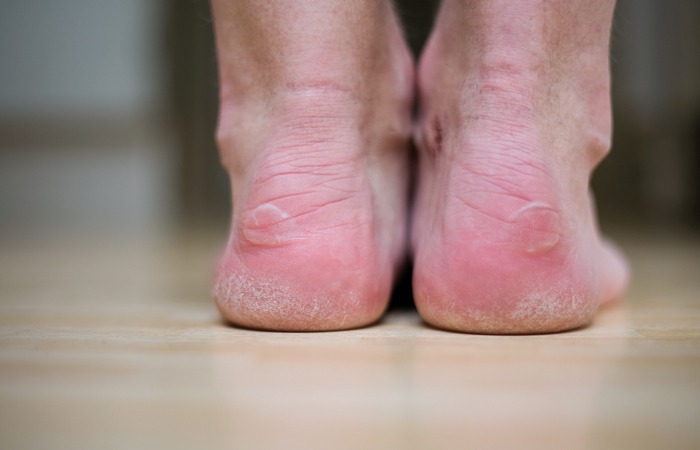
Blisters tend to be caused by friction or pressure, often from badly fitting footwear (socks as well as shoes). It’s important to treat these fluid-filled areas of skin quickly to relieve any discomfort and prevent infections, especially in people with diabetes.
“Blisters form when fluid collects between the layers of the epidermis,” says Dr McCardle. “They can be tender and painful. To reduce pain and further damage, it is recommended a blister plaster is used.”
If a blister does occur, it’s important that it is cushioned rather than popped – this can lead to risk of infection or slow down the healing process. Blister plasters use hydrocolloid technology to speed up the healing process and protect the delicate skin from further damage. An open blister should be washed with mild soap and water, then covered with an antiseptic ointment and soft gel dressing.
Freeze!
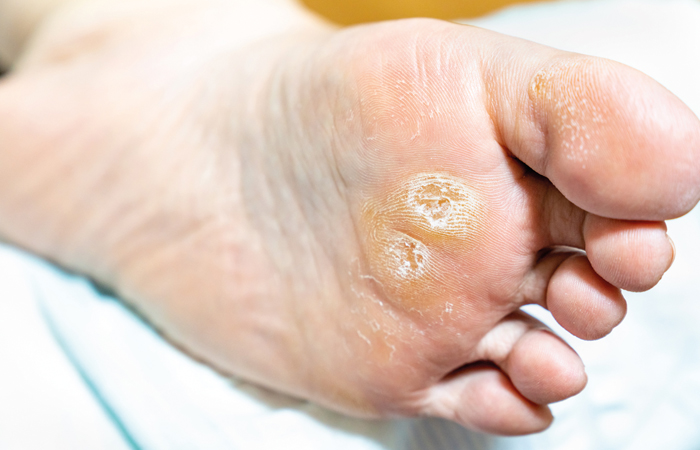
Verrucas appear on the soles of the feet and look like small cauliflower-type growths with tiny black dots. Although these warts are harmless, they can be uncomfortable and painful if they develop on the weight-bearing part of the foot. Verrucas are caused by the human papillomavirus (HPV) and tend to occur in children and teenagers. They spread easily if people walk barefoot in moist, damp environments such as public changing rooms, shower cubicles and areas around swimming pools.
“The best advice to offer patients with a verruca is to prevent it spreading by not sharing towels, flannels, socks or shoes,” says Cathy Crossthwaite, Numark OTC business development executive. “Additionally, pharmacy teams should recommend customers cover the verruca with a waterproof plaster whilst swimming and wear flip-flops or other footwear in communal shower areas. Patients should also avoid picking or scratching at the verruca, seeking advice from their pharmacist to work out the best course of treatment.”
Verrucas may disappear on their own, but this can take up to two years in adults and six months in children. For painful or unsightly verrucas, pharmacy customers can buy various treatments over the pharmacy counter, including creams, gels and freeze sprays. It’s important to follow the product instructions carefully to avoid damaging the surrounding skin. If OTC treatments aren’t working, pharmacy customers should visit a podiatrist for further therapies, such as acid-based treatments, cryotherapy or needling.