

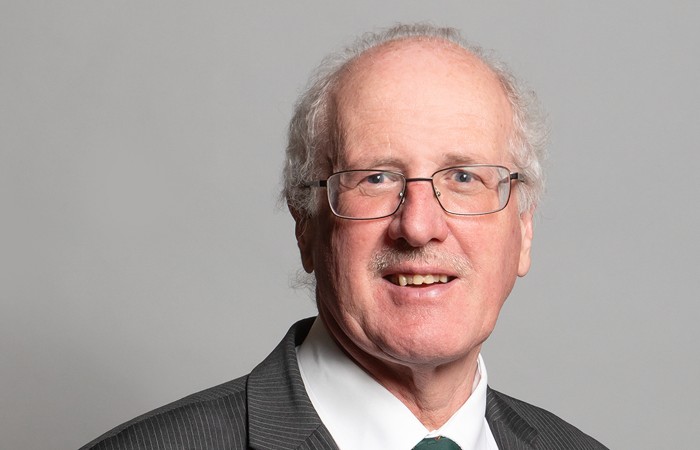
The Democratic Unionist Party MP Jim Shannon used a parliamentary debate on Tuesday to criticise the Medicines and Healthcare products Regulatory Agency (MHRA) for not doing enough to prevent medicines shortages in Northern Ireland.
He claimed pharmaceutical wholesalers, which are regulated by the MHRA, regarded the country as “a lower-priority market” because of Brexit.
Shannon also said that while shortages were a “UK-wide issue”, the situation was “particularly precarious” in Northern Ireland because of its “small market and additional logistical costs”.
He insisted that recent months have seen record shortages of medicines such as painkillers, blood pressure and epilepsy medication and Creon, a drug that helps people with pancreatic cancer or cystic fibrosis digest food.
“Recently, a constituent came to me and made a very moving appeal for these shortages to be urgently addressed,” Shannon said.
“This honourable, lovely, very happy lady has great disablement: she has multiple sclerosis and has been on the drug Nabilone for 17 years to manage her pain.
“Just last month, she ran out of that medication and was forced to spend two weeks in bed due to a disruption in supply. That demonstrates the real human cost of medicine shortages: every pill missed is not just a missed dose; it is a lifeline lost.”
Lower-priority market for medicine wholesalers
Appearing to suggest the MHRA's regulation of wholesalers was not strong enough, Shannon added: “Drug companies have to make money – that is their purpose, and if they do not, they cannot be in profit or deliver the medicines – but consideration has to be given to us in Northern Ireland, where the problems are particularly difficult.
“There are concerns that, due to Brexit, Northern Ireland has become a lower-priority market for medicine wholesalers, and the worry is that that will have serious implications for patient safety.”
The Healthcare Distribution Association (HDA), the trade association for the UK’s large pharmaceutical wholesalers, insisted its members are getting medicines to patients in Northern Ireland but conceded supply into the country has “become more complex” since Brexit.
“All medicine supply chain participants, including pharmaceutical manufacturers, have had to adapt their business models to reflect the changing regulatory environment,” the HDA told Independent Community Pharmacist.
“Following extensive work over several years, HDA members have adapted to that new environment and remain in close contact with health authorities to enable medicine supply to patients in Northern Ireland.”
Shannon said the MHRA deserved credit for “ensuring our medical treatments meet the appropriate standards of safety, quality and effectiveness” but added: “Approved medicines cannot be effective if patients cannot access them in the first place. There are currently widespread shortages across the United Kingdom – that is a fact of life.”
Northern Irish unionist politician Carla Lockhart went a step further by claiming the MHRA is unable to operate independently because it is being funded by “big pharma”.
“It is absolutely wrong that there is no independence in the MHRA,” she said. “The industry is effectively marking its own homework because, ultimately, the MHRA is funded by big pharma. The patient safety commissioner, whose role is to be a voice for patients, is also now hosted within the MHRA.”
Asked by Lockhart if he thought trust in the regulator was being damaged, Shannon replied: “I certainly do.”
The Department of Health and Social Care told ICP: “The MHRA makes regulatory decisions based on the evidence it is given, and its expert assessment of the safety, quality and effectiveness of each healthcare product, informed where necessary by independent scientific advice, and always driven by its objectives to protect public health and patient safety.
“The overwhelming majority of medicines licensed in the UK are in good supply, and we have robust measures in place to manage disruption and protect patients. We regularly stress test our medical supply chains against a range of national risks so we are prepared to respond.”


