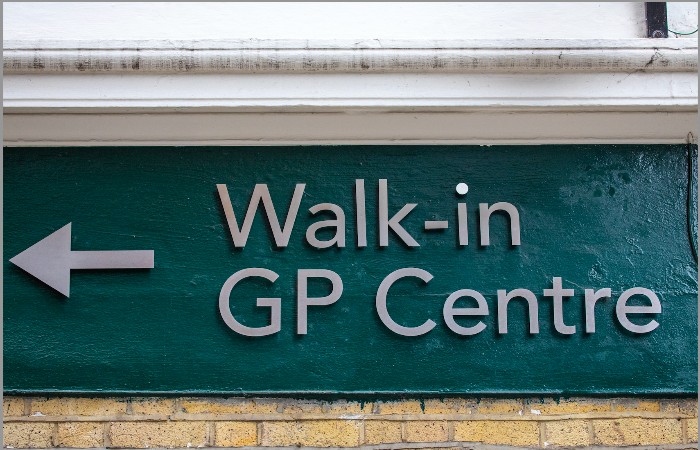
RCPharm criticises Scottish Government over GP walk-in centres
Neil Trainis,
01 Sep 2026 2 Min
2 Min

Neil Trainis,
01 Sep 20262 Min
Neil Trainis,
01 Sep 20262 Min


The Royal College of Pharmacy (RCPharm) has warned the Scottish Government’s opening of GP walk-in centres will confuse patients about where they should go for care, worsen health inequalities and provide poor value for money.
In a joint statement with the Royal College of General Practitioners in Scotland and Chartered Society of Physiotherapy (CSP), the RCPharm criticised the Government over its intention to pilot 16 centres across the country, which will eventually rise to 40.
The Government said work has started to establish walk-in services in Angus, Dumbarton, East Kilbride, East Renfrewshire, Edinburgh, Falkirk, Glasgow, Inverness, North Ayrshire, Paisley, Shotts, Tweeddale and West Lothian. It said “many will be able to open within a year”.
There are also plans to introduce walk-in services in Ayr, East Dunbartonshire, Glasgow, Glasgow North East, Glenrothes, Grangemouth, Inverclyde, Musselburgh, North Lanarkshire and Oban. First Minister John Swinney said the pilot will be extended until April 2029.
However, RCPharm, RCGP Scotland and CSP warned the centres will have “unintended consequences”, including duplicating services already provided in pharmacies and elsewhere and destabilising local services such as physiotherapy, general practice, out-of-hours general practice, hospital and community health.
“Workforce is a finite resource and the pilot sites rely on existing primary care staff working additional hours,” the three bodies said. “We know that some pilot sites have experienced difficulties to recruit staff to fulfil the intended opening hours.”
They said “investment in staffing, education and training and capacity requires an integrated and multidisciplinary approach”.
Warning the walk-in centres could “exacerbate health inequalities” which “remain deeply entrenched in Scotland”, the bodies said: “Such services are often used disproportionately by people who are generally healthier, more affluent, and more able to navigate healthcare options, frequently for conditions that are self-limiting and may not have required medical intervention.
“Community pharmacies buck the inverse care law because their distribution is heavily concentrated in high-deprivation neighbourhoods where health needs are greatest.”
They said the initial 16 walk-in centres will cost £36 million compared to Pharmacy First in 1,200 pharmacies which costs £7.5 million.
“This represents a significantly more expensive service that duplicates existing provision,” the bodies said, suggesting patients going to walk-in centres are “more likely to receive prescriptions for antibiotics and pain medication”.
“Rather than reducing demand elsewhere in the system, walk-in centres often generated unnecessary healthcare consumption and duplication,” they added.
The bodies urged the Government to “prioritise policies that deliver evidence-based meaningful improvements for patients, clinicians and the wider health and care system” instead of investing in walk-in GP centres.
“Resources could be directed towards a range of proven measures that would improve access, strengthen existing services and support higher quality patient care,” they said.
“First contact physiotherapy services, based in general practice, have transformed access to expert musculoskeletal medicine diagnosis and treatment. This can be enhanced further with digital tools.”