

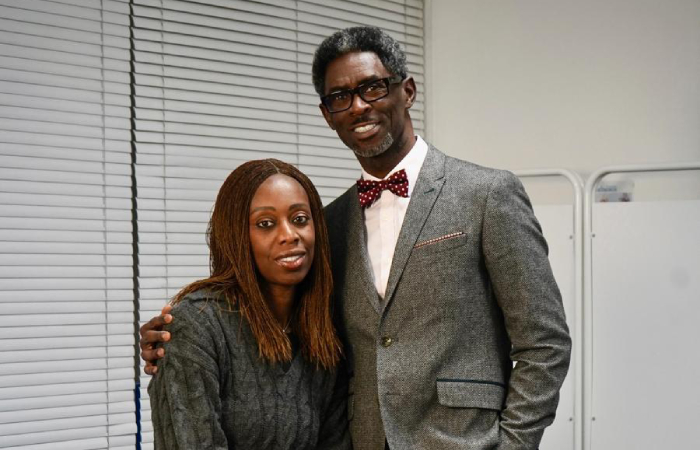
Baba and Dupe Akomolafe have added a second pharmacy to their Braintree estate and built a national booking platform since P3pharmacy last met them. Now they want Pharmacy First to live up to its name. By Saša Janković
When P3 caught up with pharmacist Baba Akomolafe and his GP wife Dupe in 2024, they had spent two decades building Christchurch Pharmacy in Braintree, Essex, into a thriving NHS and private healthcare business
A second pharmacy was never part of the plan, but two years on that’s not the only addition to their offering.
“We knew Braintree is the place we want to be,” says Baba, superintendent pharmacist and director, “but we started to think about how we could better serve the community, so we asked Avicenna Pharmacy if they were willing to sell.”
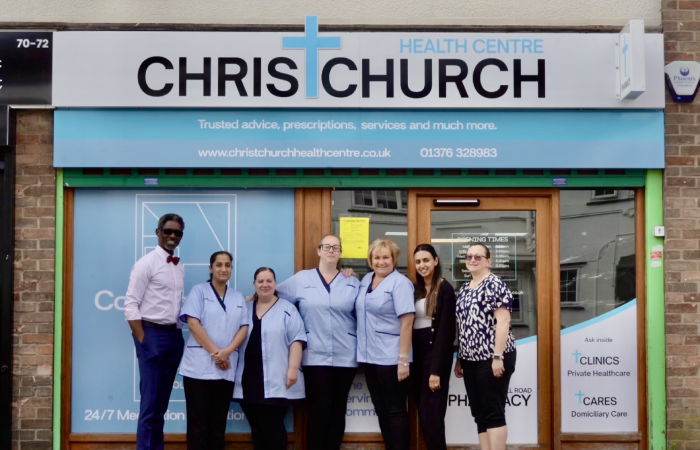
A few months later the answer was yes, and on May 1 this year the couple took over what is now Christchurch Pharmacy Coggeshall Road, inheriting eight members of staff.
The branch is a 10-minute walk from their main site on Mace Avenue, next to Braintree’s second-largest GP surgery, where Dupe worked for 19 years, 18 of them as a partner.
“We had never really served this cohort of patients, so it’s really nice to have that spread,” she says, “and when the opportunity came, it really was a no-brainer.”
Three sites, one family
In a local hub and spoke model, Mace Avenue, home to the robot and automated systems, is the hub, and the two pharmacies share staff and systems.
Completing the trio is Christchurch Clinics at the end of the high street, where Dupe runs a private GP practice, and which is also the base for Christchurch Cares, a domiciliary care agency that extends the range of care and support they offer their community.
The couple’s two sons have also joined the business. Dara’s role as the media and marketing director has significantly enhanced the visibility and profile of the business and its breadth of services, and Daniel is the digital integration lead, driving digital transformation to streamline operations towards a more integrated, efficient and paperless business.
Service shift
When it comes to services, ear wax removal and travel vaccinations are delivered at the clinic, with the NHS pharmacies offering Pharmacy First and acting as “the front door” for the private offering.
All three sites use Nuumad’s digital consultation platform, and phones and patient systems are linked, so pharmacists can even do New Medicine Service consultations from the clinic.
“Ear wax microsuction, which accounted for just under 1,500 consultations in 2023, is still the busiest service”, says Dupe, “and we’ve trained up one of our dispensers as a dedicated practitioner who now runs her own clinic, seeing 35 to 50 patients a week, with referrals coming from both pharmacies.”
Travel is growing, and cryotherapy has expanded since Dupe moved from ad hoc appointments to a dedicated clinic, while weight management, still on the horizon two years ago, is now established and its numbers are climbing.
Because the clinic (which is also CQC registered) is registered under Christchurch Pharmacy, it can also deliver NHS services from its five consulting bays, and this vaccination season has seen around 300 patients on a COVID and flu clinic day.
However, Pharmacy First has been a different story. “The service itself is fantastic, and absolutely a great idea,” says Baba, “but the way it works is not really great”.
The problem is access. “The NHS app takes patients straight to their GP, leaving community pharmacy digitally excluded”, he says, “and we regularly fall short of the £1,000 monthly service payment threshold, sometimes by a single consultation, so what is the point of them adding these five more conditions to something that is not accessible anyway?”
Added to this, Dupe says as the new Pharmacy First conditions can only be treated by independent prescribers, this creates more hurdles for patients: “As a patient, how do I know which pharmacy has an IP? Even as a GP, how do I know?
“When a referred patient can’t be seen they get bounced back to the surgery, often at 4pm, so the GP is unhappy and the patient leaves thinking their pharmacist couldn’t help.
“All of this is setting community pharmacy up to be discredited, when they are without a doubt the most accessible healthcare profession in the community.”
A digital front door
Just over a year ago Baba wrote to the then care minister Stephen Kinnock, asking why Pharmacy First couldn’t sit on the National Booking Service (NBS) alongside flu, covid and RSV vaccinations or, failing that, on the NHS app.
“The answer to both was ‘no’”, he says, “and although the government made funding available, they made the doorway so narrow that you can’t reach that money”.
“The NBS exists, but we only use it twice a year for the campaigns when it could be working all the year through”, he adds, blaming “a lack of will to open the door”.
As for the excuse of a booking app risking digital exclusion, he says: “Let those who can go digitally go digitally, so that those who cannot can have free access to walk in to the pharmacy.”
Never ones to stand still in front of a barrier to access, the couple built their own digital booking service for pharmacy: the Community Pharmacy National Booking Service (CPNBS) mimics the NBS where pharmacies can choose which appointments to open, and patients choose where to book.
“The wider idea is that a GP surgery or A&E could simply direct patients to a single QR code, where they would see at once which nearby pharmacy has an IP”, says Baba, and the group is also working with the LPC to use it for other services.
Automation and investment
Hub and spoke could be another “shortcut to efficiency”, according to Baba, with collection points on both Christchurch pharmacy sites already handling 30 per cent of handouts.
And while it’s early days for hub and spoke, Baba foresees challenges here too. “Items costing up to £1.20 to dispense by hand could cost 10p to 20p from a large hub, and around 70 per cent of a pharmacy’s workload could be handed over, freeing teams to deliver services”, he says, “but that only works if the government lets the services come through. Otherwise you’ve automated yourself, and then you’re having to get rid of staff because they don’t have enough to do.”

Collaborate and compete
For Baba, the biggest opportunity lies in pharmacists’ own hands.
“As neighbourhood networks arrive under the 10 Year Health Plan, Braintree’s seven pharmacies will need one voice”, he says.
“As PCN engagement lead, I am pulling local pharmacists together to present a single message to GP surgeries and the ICB because that grassroots work is not going to be done by the LPC or the NPA or the IPA or the CCA, it’s going to be done by me and the other pharmacists down the road. We need to be a network to be part of the network. We need to collaborate with each other, for others to collaborate with us.”
And his message to Andy Burnham’s government? “If I had one thing to ask, it’s make pharmacy services available on the NHS app”, he says.
“We are entrepreneurs. We don’t carry baskets begging for money. We just want opportunity. Make the conditions accessible, pay appropriately, and the expansion will be organic. Then Pharmacy First truly will be first.”


