


Interview: Changing the narrative about online pharmacy
Arthur Walsh,
12 Dec 2025 1 Min
1 Min

Arthur Walsh,
12 Dec 20251 Min
Arthur Walsh,
12 Dec 20251 Min


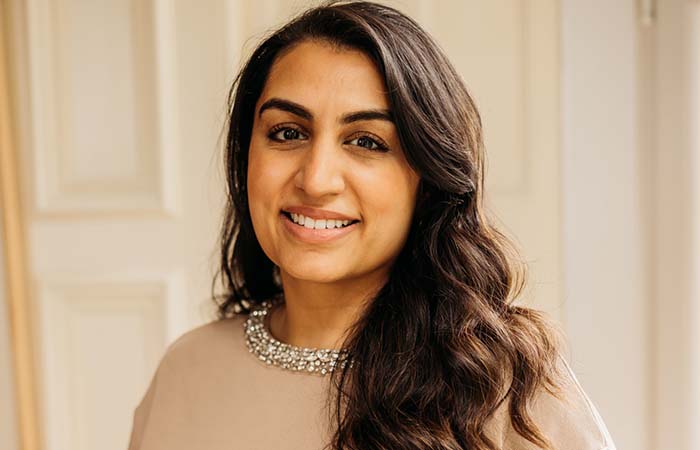
‘Portfolio working’ is something of a buzzword in pharmacy these days. For Glasgow-based Sehar Shahid, it’s a lived reality and a way to combine her entrepreneurial streak with her other passions. Her day job is running 24hr Pharmacy, the online private pharmacy she set up nearly two years ago. Sehar combines this with her duties as NPA board director for Scotland along with wearing numerous other hats, as I learn when I speak to her in November.
Sehar clearly sees safe patient care as the strand that ties her varied roles together – and argues that some in the sector neglect it at their peril. She is a trained obesity specialist, prioritising a holistic approach over the drugs-only, ‘transactional’ way of working some other providers have demonstrated. “For me that’s my niche, it’s what I’m really good at,” she tells me.
She knew from the get-go her online pharmacy would have a different ethos: “Online pharmacies are typically quite transactional and have minimal contact with the patient. What I wanted was to have a holistic care-led approach with patients alongside medication – which is just one tool. I wanted to empower patients and teach them to live healthier lives.”
She operates with a lean team: a full-time dispenser and an in-house herbalist, as well as some part-time independent prescriber phamacists. How has the first year of trading been, I ask Sehar; was there a ready market to tap or has she had to market extensively?
“What I realised was that obviously online pharmacy is quite a crowded area – there are a lot of amazing online pharmacies that have dominated the market before I entered. For us it was about defining what our USP was.”
“It’s female-founded. We focus on weight management, women’s health and holistic care so our target market is quite clear. That’s been a big differentiator between us and other generic online pharmacies who just target everyone.”
In terms of marketing, they have been building social media and engagement is high. ”We’re posting consistently. It’s about education and building trust,” she says.
New patients often tell her they’ve seen the pharmacy on Instagram or that they were recommended by existing patients. “That is genuinely how all of our customers come to us, it’s quite organic growth, albeit it could be accelerated when you run ads.”
She prefers an ‘organic’ route “because that allows me to have a high retention rate; people have thought long and hard before they’ve chosen us”.
On a typical day, as the prescribing pharmacist she’ll be looking at orders, doing consultations and processing prescriptions, as well as meetings with potential partners and existing ones.
Having helped numerous distance selling pharmacies with their clinical governance, protecting patients is close to her heart.“There is a lack of education,” she says. “A patient never asks themselves, is this pharmacy registered? Is it legitimate? Does it have standard operating procedures in place? It doesn’t cross your mind. Unfortunately, the reality is there are many pharmacies that aren’t compliant and don’t have the best standards – and can actually put patients at risk.”
She posts on social media about things patients can look out for, like checking a pharmacy’s registration number on the General Pharmaceutical Council website, whether they are UK-based and if patients can speak to prescribers. “If there’s no way to contact them, that’s obviously a red flag,” she warns.
“There is an element of people choosing a pharmacy based on price, but I am now starting to see that change compared to when Mounjaro first came out. Patients who are a year or two years into their journey are now on maintenance and maybe thinking about reducing the dose or stopping treatment. They think, I need a bit of guidance and support here; I need providers who will give that and not just a price and a transactional service.”
Sehar had what she describes as a “very typical” start to her career, doing her pre-registration training with Boots and then working her way up the ladder to become an area manager.
Empowering the teams she worked with was a fundamental part of her role, she says. “I’d tell them: This isn’t my store, this is your store. You guys need to put the effort in to make it what you want it to be.” Management required an understanding of each team member’s strengths and an ability to identify where they needed extra encouragement, she explains – as well as getting tough where necessary.
She says: “An accuracy technician might have had a bad experience with previous managers and become demotivated. But when you get to know them and give them work they will thrive... The reasons stores were like that was because poor performance was never actually challenged or dealt with.”
Her work for Boots was satisfying up to a point, but life as an employee was never her long-term goal. Then her two children came along, which “quickly made me realise I didn’t want to be working 60-70 hour weeks for someone else and be away from my kids”.
While employed at the chain, she had started a health and wellness business “as a side hustle” and managed to scale it up to the point that the income it generated exceeded her Boots salary, making the decision to go back on a part-time basis after her second child was born in 2019 an easy one.
This financial freedom then allowed her to leave Boots and move into a primary care role with Renfrewshire Health and Social Care Partnership that saw her oversee 25 care homes – and paid half her previous wage. “I was able to do primary care work because I genuinely wanted to, not because I had to think about the salary.”
This marked the beginning of her independent prescribing (IP) career, and also gave her “a really good opportunity to develop a role that hadn’t really been developed before”.
From there, she was headhunted to work for an online pharmacy who “needed a lot of support around their governance and compliance”. She had to be persuaded to take on the role, having first turned it down because of her lack of experience with distance dispensing. “I think what they saw was my background as a store manager in Boots. I was historically sent to the stores that were really badly performing.
“My job was always to go in, turn it around, nurture and develop the staff, make the processes safe and compliant and allow the business to grow from there. What I quickly learned was that I was actually quite good at putting the governance and compliance in place into any business, regardless of what type of model it was.”
She worked “really closely” with GPhC inspectors and shared with them work she had done around risk assessments, audits and clinical governance, which the GPhC took photocopies of: “I think I certainly did have an impact on how the GPhC viewed online pharmacies.”
She says: “From there I realised there was a gap in the market. There were a lot of online pharmacies that didn’t really understand the regulations, weren’t compliant and perhaps were not operating in a safe manner.
“At the end of the day, regardless of which pharmacy it is, there’s a patient at the end of every interaction. We need to be providing the same level of care.”
This inspired her to set up a consultancy business supporting other online pharmacies, in some cases setting their governance structures up from scratch.
“I absolutely loved it,” she says. She still does consultancy work but “it’s exclusive to certain clients I’ve worked with on a long‑term basis”.
She had offers from other parties to go into business on a new online pharmacy but decided: “If I’m going to do it, I’m going to do it by myself.” In 2023 she decided to make the leap.
“I would love to say it was all smooth sailing but it wasn’t,” she says. For one thing, she has encountered barely veiled sexism. “I would speak to the bank or to potential partner companies and be asked, is your husband a pharmacist? Who’s your business partner? People treat you very differently being a woman in that position than if you were a man.”
Other people’s ingrained assumptions aside, Sehar has always had a strong entrepreneurial streak. “It was always there. My parents are in business as well, it was an entrepreneurial family.”
The freedom and flexibility are the big drivers for her – far more than money. “When you have true time freedom you actually have true wealth.”
The tragic loss of her younger brother during the pandemic “really put a lot of things into perspective for me... You’re on this hamster wheel in a 9-to-5 job, you just think why am I doing this when life is so short?”
She realised she needed the freedom “to not just look after my own family but also my extended family – I wanted to be there for my parents as well, who aren’t getting any younger”.
Going into business by yourself carries inherent risk. Was that at the back of her mind? “I think I did it in a very safe manner. I didn’t leave my full-time store manager job until my health and wellness business covered my salary.”
Still, like any business owner she must make friends with a degree of uncertainty. “In any business it could work or it couldn’t. But the worst-case scenario is being exactly where I am in the next five years and not moving forwards. That’s scarier to me than giving it a go.”
In early 2024 – while busy setting up 24hr Pharmacy – Sehar took on a new responsibility with her election board director for Scotland at the National Pharmacy Association (NPA). “It’s a huge, huge opportunity,” she says. “I never thought someone like me would ever become a board director of the NPA.”
She’s the youngest ever board director, “which for me is really empowering to show the next generation that if you work really hard you absolutely can be at the board table.”
She says the world is moving on from “white men over 50” dominating leadership roles, adding: “I do believe that more women should be in positions of making decisions, owning businesses – I’m very passionate about that.”
She spent the first year at the NPA finding her feet and “getting people to trust me” and imposter syndrome crept in. “I’d be at the table and think, I’m the youngest, I don’t have an NHS pharmacy – everyone else has a very different business model and faces different issues.”
But the board was “so welcoming” and grateful to have a different perpective represented. “Pharmacy is changing,” she says. “It’s not just about bricks-and-mortar and the NHS service. Now so much of it is about empowering members to grow their private services so they can survive.” She’s set up member workshops, even hosted some in her own business to show “how we get the job done”.
Many in England have the impression that in Scotland the pressures are less acute and contractors don’t feel the pinch as much. Is that her experience from her members? “It’s never easy for anyone, regardless which nation you’re in. However, I would say in Scotland we do have a slightly better deal. We do a lot more in our Pharmacy First service, we have way more conditions than England and our referral pathway is not as restricted.”
Is Scotland further ahead with prescribing too? “Definitely.” Like others, she is concerned about what will happen from summer 2026 with the IP cohorts graduating. “Where is the support system for this whole influx of pharmacists? It’s not there at the moment. The NPA is looking to see what we can do to support our members.
Even today’s qualified IPs often need support to practise safely, she says, repeating her mantra: “There’s always a patient at the end of it. Sometimes we can lose sight of that.”
The support structures are stronger for IPs in primary care, she says. “In community pharmacy you’re working in isolation. You don’t have a multidisciplinary team with a nurse and GP down the corridor.”
Nonetheless, “pharmacists are great clinicians, when it comes to not just prescribing but also giving patients counselling and non-medical advice. Patients trust us.”
Sehar has just started a new venture, she tells me, joking that she “must have all the time in the world”. Dose of Empowerment is a networking community for women in pharmacy and has just launched in Scotland, with plans to expand UK-wide soon.
“Over the last four or five years as I’ve gone on my business journey, it’s been very lonely,” she says. “I haven’t had any kind of mentor in this industry, and I’ve faced a lot of challenges, a lot of criticism. I wish I had a community where other women were supporting me, breathing that belief into me in the moments when I had self doubt.”
The picture we portray on social media of an effortlessly successful life masks a lot of challenges, she says. “I’ll get messages on social media almost every week saying, that’s so inspiring what you are doing, I just wouldn’t know how to do that myself. I thought, you know what, there’s a need here.”
She’s excited to grow the community “but I don’t know when I’m going to sleep”.
“I think I’m quite an organised person anyway, for me it’s just about having the right tools in place that allow me to have that structure and prioritise.” And she’s learned the hard way that she needs to delegate tasks to the best people, something she says can be hard for pharmacists.
What are her plans for the future? She replies that her goal is “to really acclerate the growth in 24hr Pharmacy and support more patients to become healthier”.
And as the company’s services evolve, “there’s opportunity for the team to upskill and learn more things. That opportunity is always there. I think as humans we have to be open to that. I think that’s key.”
“I truly believe if you love what you do it doesn’t feel like a chore. Sometimes I don’t know how I manage to fit it all in but to me, I thrive on this.”


