


 Background
THIS INFORMATION IN THIS MODULE IS FUNDED AND CREATED BY BAVARIAN NORDIC AND IT CONTAINS PROMOTIONAL CONTENT ABOUT BAVARIAN NORDIC PRODUCTS.
BACKGROUND
CHIKV spreads through the bite of infected female Aedes mosquitoes, most commonly Aedes aegypti and Aedes albopictus, which can also transmit dengue and Zika viruses.1 CHIKV was first isolated in Tanzania in 19521, with subsequent sporadic outbreaks predominantly occurring at relatively low levels in tropical and subtropical regions of Asia and Africa where Aedes mosquitoes usually have a wide distribution.3 However, Aedes albopictus has adapted to locations with cooler climates, allowing wider global distribution,4 including to parts of Europe and the USA.3
International travellers who become infected on their journey can introduce CHIKV to new areas of the globe.3 Recently, this has caused outbreaks of more severe forms of chikungunya becoming more frequent and more widespread.1,5 Large international outbreaks have affected millions of people in areas not previously experiencing the disease, such as the Indian Ocean islands, India, the Pacific islands, the Caribbean and Central and South America.3
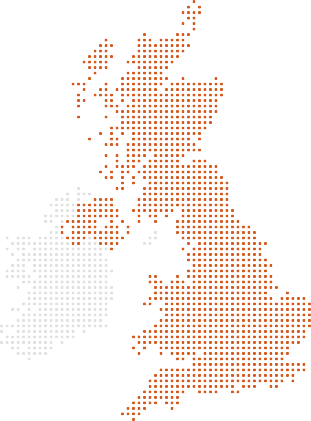
CHIKV HAS NOW BEEN IDENTIFIED IN MORE THAN 110 COUNTRIES WORLDWIDE1 AND TRAVEL-RELATED CASES HAVE ALSO BEEN REPORTED IN ENGLAND, WALES AND NORTHERN IRELAND.6
IN 2025, THERE WERE 458,840 CHIKV CASES AND 146 ASSOCIATED DEATHS REPORTED WORLDWIDE.
The latest update from the European Centre for Disease Prevention and Control shows that reported CHIKV disease cases reported in October 2025 increased by 108% compared to September 2025.7
CHIKV PATHOGENESIS
Click through the carousel to learn more about CHIKV pathogenesis.
1. TRANSMISSION
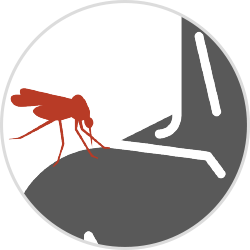
CHIKV is transmitted to a human through the bite of an infected Aedes mosquito.1 During feeding, virus-containing saliva is deposited in the dermis4 where it activates an innate immune response.5,8
2. INFECTION
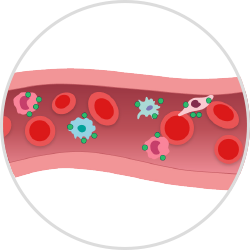
The virus initially infects dermal fibroblasts, keratinocytes, melanocytes, dendritic cells, macrophages, synovial fibroblasts, endothelial cells and myocytes.4,5 This triggers the release of pro-inflammatory and anti-inflammatory cytokines and chemokines,5 attracting immune cells which allow viral dissemination to draining lymph nodes and secondary tissues via the bloodstream.4,5,8
3. ACUTE PHASE
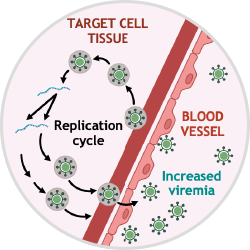
CHIKV predominantly affects muscle satellite cells, joint-associated fibroblasts and connective tissue, but it can also infect lymphoid tissue, the liver, spleen and, less commonly, the brain and skin.4,8 The high viraemia causes acute symptoms.4
During this phase, the virus can be detected in the blood by real time RT-PCR (Reverse Transcriptase Polymerase Chain Reaction).5 This diagnostic test detects CHIKV RNA and is the most reliable test for early diagnosis.9
4. CONVALESCENT PHASE

During the Convalescent Phase (after ~7 days), viraemia declines and the PCR becomes negative.10 Serology (ELISA - enzyme-linked immunosorbent assay) is used to detect CHIKV-specific IgM and IgG to confirm infection.5,9,10,11 IgM is detectable within days of infection, while IgG is typically measurable from the second week and lasting for more than a year.5
Persistent immune activation and residual viral RNA may contribute to chronic arthralgia (joint stiffness) in some patients.4,8

Content developed by Bavarian Nordic UK working with CIG Healthcare Partnership.
© 2026 CIG Healthcare Partnership
UK-VIM-2600013 | September 2026