

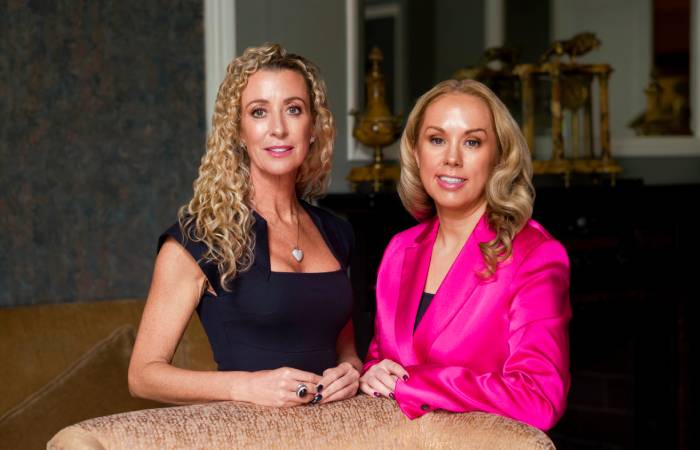
Irish synthetic CBD brand Pureis Ultra Pure CBD recently became the first product of its kind globally to secure approval as a food supplement following a landmark decision from Saudi’s FDA. P3pharmacy caught up with the team at Chanelle McCoy Health to learn more
What is the significance of the recent announcement?
Chanelle McCoy, CEO: What the Saudi Arabian regulator’s decision means is about is that we are the first and only company in the world to secure regulatory approval for CBD as an oral food supplement.
We also recently became the first company to receive confirmation from the European Food Safety Authority (EFSA) that our product is safe, so we are essentially safety approved by the European Commission under the novel food framework for food supplements. It's a landmark achievement because it positions our lab-made CBD at the forefront of a category that that is going to grow.
Today the CBD industry is worth $9bn, but it's growing to $22 billion by 2030. To be the first mover, particularly being the first player in the Middle East and the first company globally to get safety approval from Europe, is hugely significant.
What has the path to get here been like?
Caroline Glynn Coen, chief scientific officer: In a way, doing a novel food submission is very similar to what you'd have to do bringing a new drug to market with your Phase 1 safety and toxicology studies. You have that suite of studies that need to be done, and they do take time, and then you have a whole analytical chemistry part component.
The scientists within the European Commission methodically review it from a chemical analytical standpoint of the molecule itself, as well as toxicology and clinical reviews.
When you take a medicine, there's is a risk-benefit trade-off, but we cannot have any risk with food items. Hence why it's quite extensive in terms of the assessment that they do, and why it has taken us quite a long time to get this approval.
CM: We visited the Saudi FDA eight times in Riyadh, and we got rejected eight times. We were trying to get them to change the law to classify our lab-made CBD as a food supplement because we knew it shouldn't be positioned as a medicine.
We had extensive analytical testing to show that there's absolutely no trace of THC in our product, because that was Saudi's main concern. After a lot of discussion over the science, we got them to classify the product as a food supplement and they ultimately give us our license.
Why go to the Saudi FDA?
CM: The issue with the UK is the legislation came after all of the players were on the market. Therefore, we have a lot of bad actors on the market, and we can say that with confidence. We have lab tested a lot of the leading CBD brands and we have analyses to show what is contained in their products, for example benzine and often quite high traces of THC.
We thought, we have a great product. Our product is lab made, which means there is absolutely no trace of THC. We decided to go to one of the most respected regulatory bodies in the world – and we knew this because Caroline and I were in the generic prescription industry for 15 years before we set up our company.
We decided to contact the Saudi FDA authorities because we thought from a science point of view they're a very well respected regulator, but also culturally they're very conservative; they don't permit alcohol. We thought that if we could get them to classify our product as a food supplement and let us launch on the market, it would be great to be the first mover in a market where there are no competitors.
There are 6,500 pharmacies in Saudi and we'll be launching in over half of those by the end of the year. We have huge interest from the big pharmacy chains in Saudi because they massively respect the Saudi FDA.
That in turn has opened up many markets for us, because we're able to go to different regulators with our Saudi approval. We're under registration in over 40 countries globally as a food supplement.
What are your expansion plans?
CM: We’re lucky that the Saudi market can be a testing ground for us now as we expand the category. In our R&D now we have an extensive combination supplement range.
We'll be launching protein bars and beverages in Saudi, as well as a CBD shot drink for pharmacies there. There is also a veterinary arm – we have a camel trial running in the middle east to show the efficacy for joint pain in camels. Ultimately, we want to bring our product as an OTC medicine at a higher dose, so we are pursuing clinical trials efficacy phase 2 and 3 for that as well.
We are out now doing a growth capital raise because we're seeking investment to bring into the business. We want to bring it back into the UK but we are very mindful as a business that we're not going to invest hugely in brand equity there, because the Government has to take the bad actors off of the market; there's too much confusion caused by having unregulated CBD products available.
As a lean team, can you navigate the market more nimbly than a large corporate?
CM: There's pretty much just Caroline, myself and two amazing regulatory senior regulatory professionals in the company. We are focused on clinical trials and regulatory licenses and assign the distribution to our partners in different in different markets.
They do the heavy lifting with the branding and the B2C, while we're very much science and regulatory focused. We can be so agile; we can jump on a plane, we can go out and meet the minister of health in different countries. We make decisions quick and we execute.
If you look one of the biggest companies in the States called Charlotte's Web, they submitted their safety data into the European Commission and they failed their safety assessment.
I mean, they're the number one CBD company in the States. And we are a little Irish company and we were the first – we beat all the big boys to get safety approval.
Do you have any message for UK pharmacies?
CGC: It's very challenging for a pharmacist to try and work out what to stock. You know, if I'm recommending a particular product to a consumer, how am I going to be guaranteed there' no trace of THC? How am I going to be guaranteed safety?
So, I would say to the pharmacists in the UK, stock CBD because it's fantastic for consumers for first line defence in many areas, but just go for regulated products.
CM: There is going to be a change that maybe pharmacies are not going to be aware of. We have been informed by the UK Food Standards Agency that in order to continue selling CBD in the UK market, you're going to need to follow EFSA rules. So, you're going to really need to have your own novel foods application approved within the EU.
There’s going to be potentially some CBD companies that don't have this application, so when the alignment occurs, they won't be able to sell their current CBD range. For us, having EU safety approval means there will be no break.


